
Benchmark · October 2026
Three AI models, 17 furniture photos, one attempt each.
We gave GPT-6.1 Terra, Claude Sonnet 5.5 and Claude Haiku 5.5 the same job inside the Fabivo assistant: look at a photo and build furniture that can be cut. Same prompt, same tools, one attempt per photo, no retries.
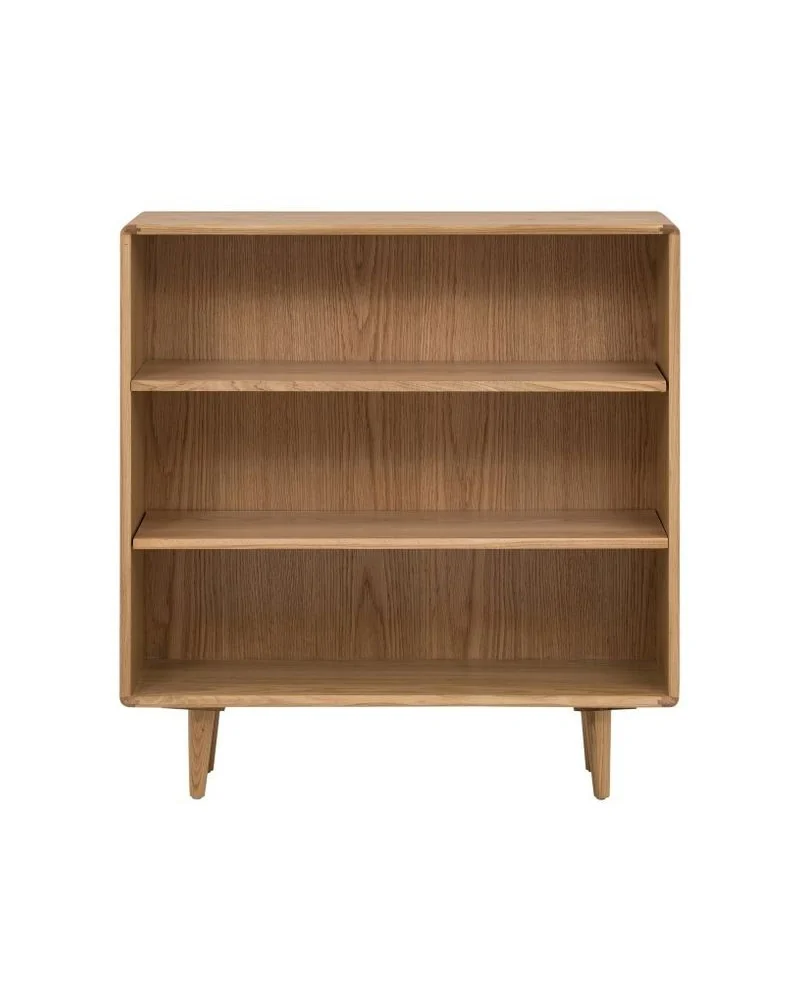 The photo
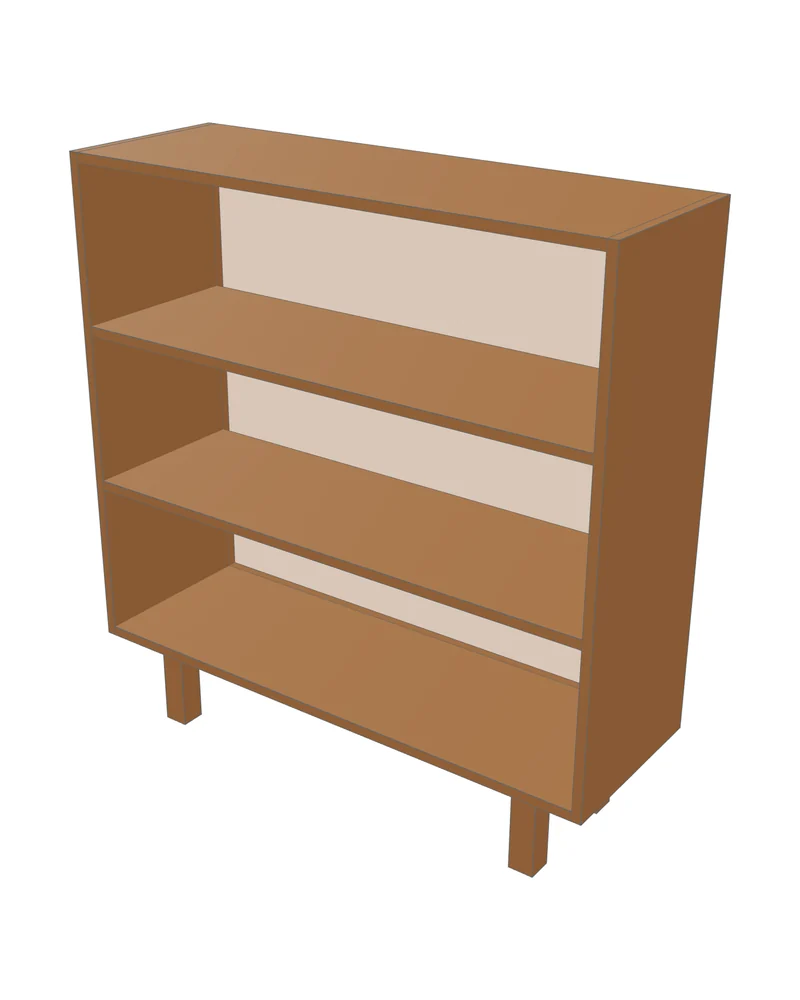 Terra
- Photos
- 17 real pieces of furniture
- Models
- Terra, Sonnet 5.5, Haiku 5.5
- Attempts
- 1 per photo, no retries
- Reasoning
- Medium for all three
The test
Each model gets the photo and the instruction “model the furniture in this photo”, with the same system prompt and the same tools the in-app assistant uses: read the model, write it, edit it, zoom into part of the photo, and ask a question. It has to deliver valid furniture: connected, supported, and with no boards running into each other.
The photos show real sheet-goods furniture: bookcases, TV stands, display cabinets, benches and cube shelves. This is an internal test: examples from this set informed our assistant work. It is not an independent held-out test.
Results
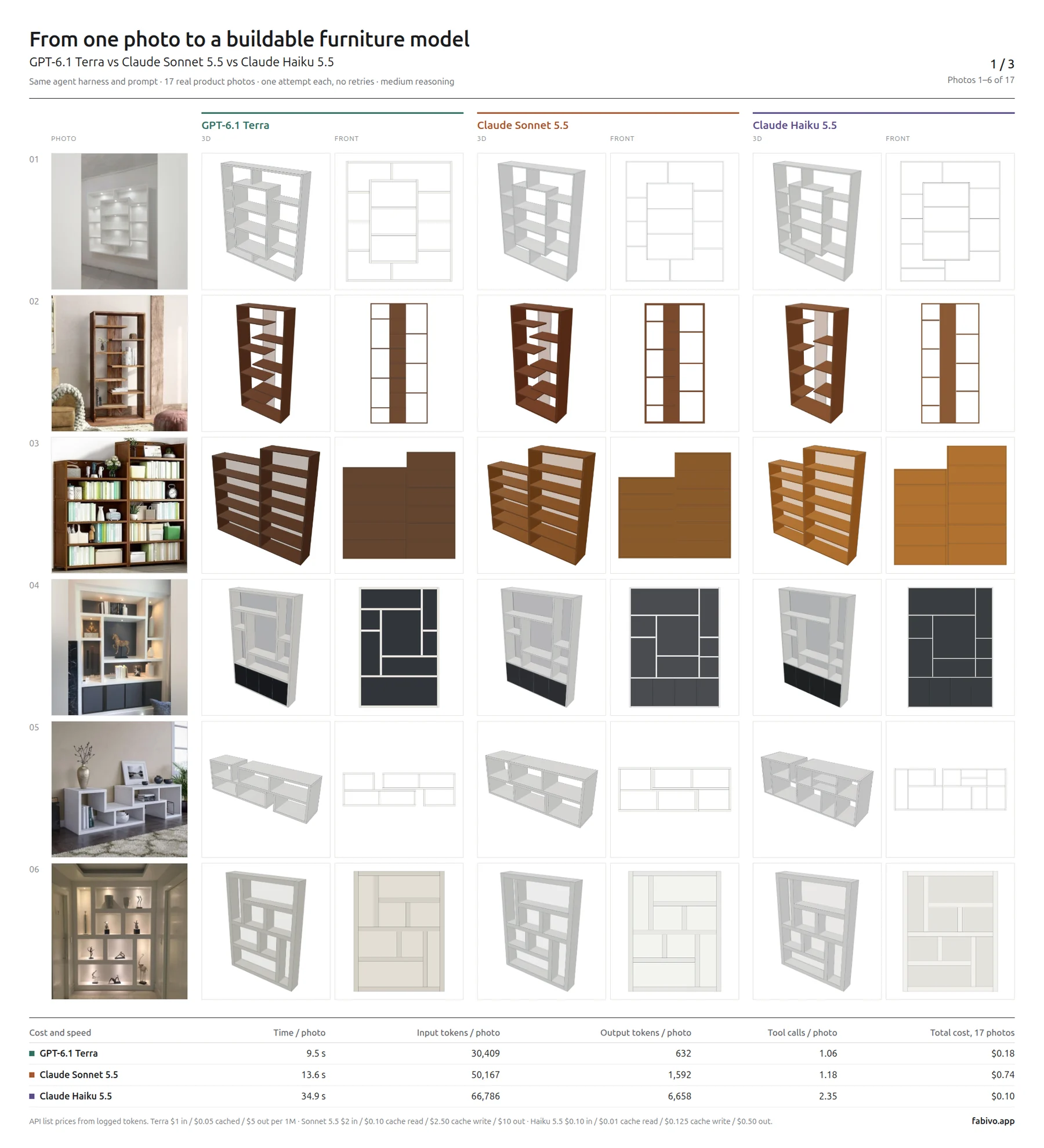
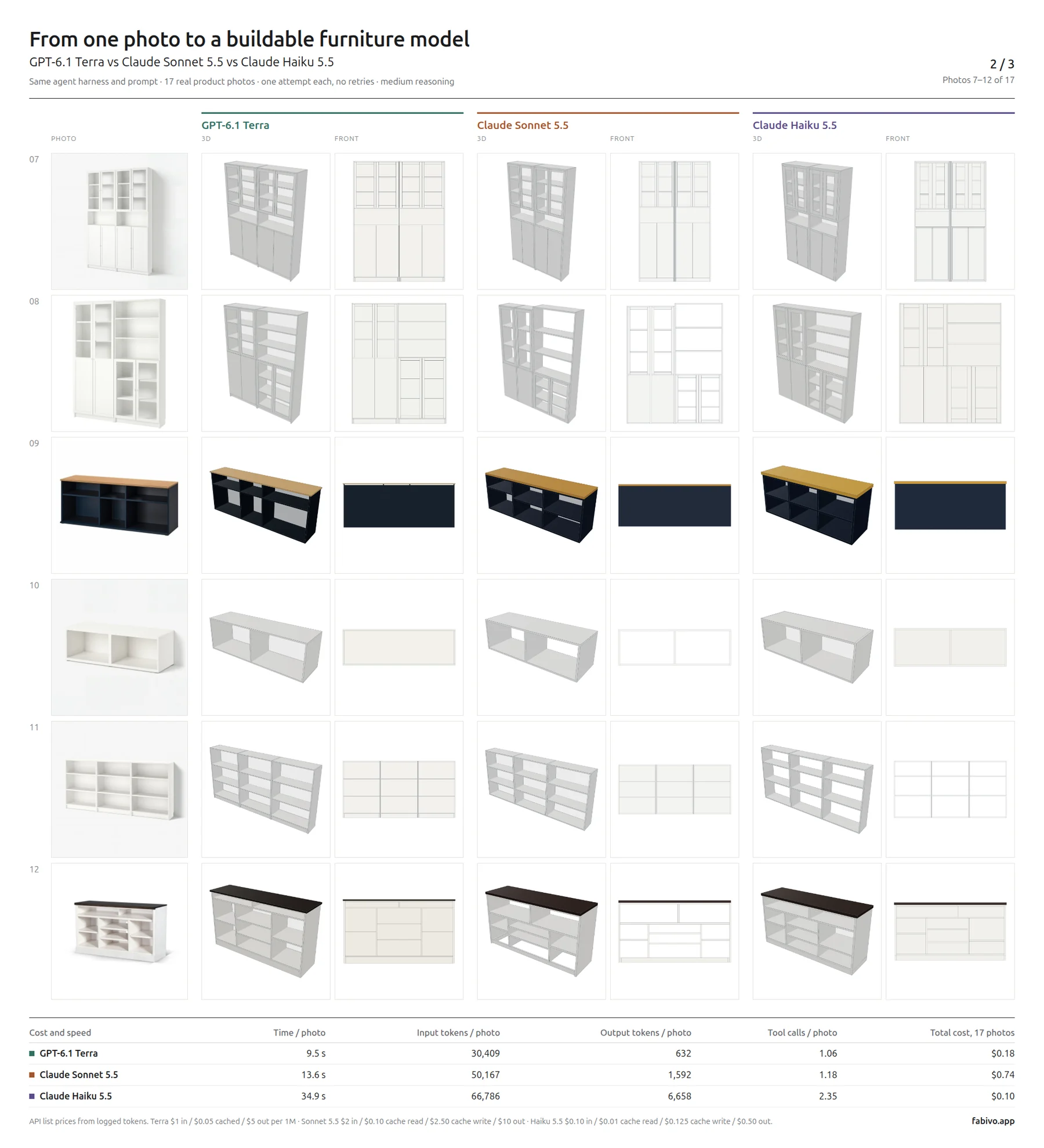
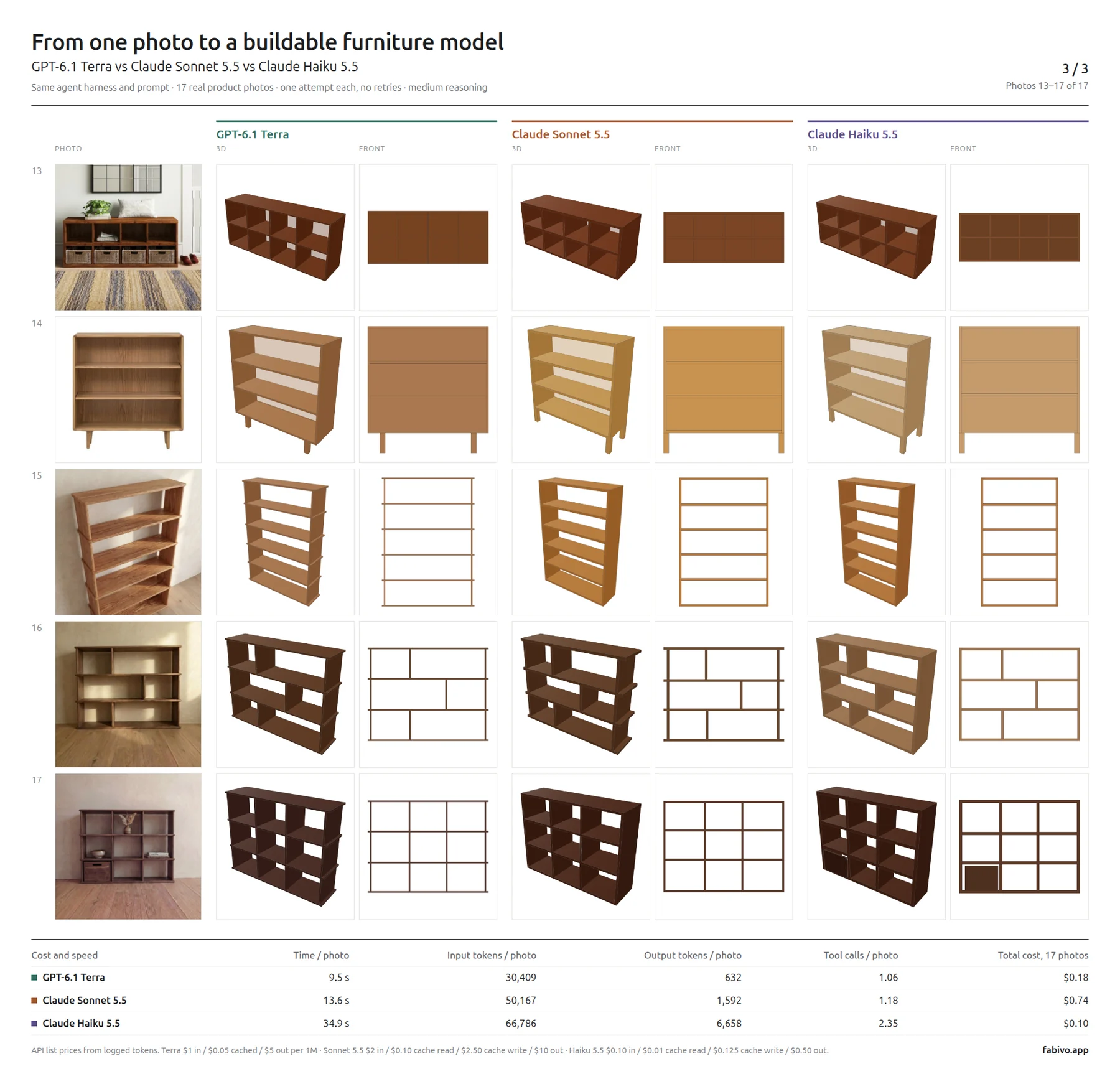
All three models delivered valid furniture for all 17 photos. What differs is how close it is to the photo, how long it takes and what it costs.
| Model | Time | Input tokens | Output tokens | Tool calls | Cost (17 photos) |
|---|---|---|---|---|---|
| GPT-6.1 Terra | 9.5 s | 30,409 | 632 | 1.06 | $0.18 |
| Claude Sonnet 5.5 | 13.6 s | 50,167 | 1,592 | 1.18 | $0.74 |
| Claude Haiku 5.5 | 34.9 s | 66,786 | 6,658 | 2.35 | $0.10 |
What we saw
Terra took less time and used fewer tool calls. Compare rows, openings and proportions in the front views: a valid model is not necessarily a faithful copy of the photo.
Sonnet 5.5 averaged 13.6 seconds per photo. Its total cost was about four times Terra’s in this run.
Haiku 5.5 is the cheapest per photo, but it produces about ten times more output tokens than Terra and takes longer. Most of that output is reasoning, not furniture JSON.
A photo may hide the back, depth or a joint. These models do not prove strength or load capacity: check sizes, material, joints and wall fixings before you build.
Limits of this test
These are arithmetic means over 17 photos, including every request and tool call in each session. Input includes cache reads and writes; output includes reasoning. Models could correct their work with tools, but failed sessions were not restarted. Two unusable references were excluded before these runs.
Cost is the API list-price equivalent, not a bill for the subscriptions used. Terra reported no cache writes: including unreported writes could raise its estimate from $0.18 to about $0.21. Time measures the agent loop, including the network, not a person reviewing the plans.
It is a small set without repeated trials: it does not establish which model is best for every kind of furniture. Download the CSV results · Read the full method.
Frequently asked questions
Which model does the app use?
The app now uses GPT-6.1 Terra. This comparison used revision 359e7f2 on October 26, 2026; the production model and tools can change.
How is the cost calculated?
From the input, cached and output tokens logged for each request, multiplied by each model’s published list price in October 2026.
Why is there no score per model in the images?
Because we would rather you look at the results side by side. The automatic score compares boards with a reference drawing and misses things a woodworker would notice in the photo.
Try the same task with your own photo.The assistant is in the app. Free, no account.
Try the assistantUpdated